The board, the session hour, the virtual upload and every abstract deadline and fee for Neuroscience 2026, read from the Society for Neuroscience’s own pages on 10 October 2026. Where SfN says nothing, as on fonts, the article says so and names the page it checked.

SfN spreads its rules for presenters across a dozen pages: dates on one, the board on two others, the abstract limits on a fourth, the late-breaking rules on two more. The table below pulls the numbers a presenting author acts on into one place, with the SfN page each one comes from, so you can check any row against the original.
| Item | Neuroscience 2026 | SfN page |
|---|---|---|
| Meeting dates | Saturday, November 14 to Wednesday, November 18, 2026 | Neuroscience 2026 home; Dates and Deadlines |
| Venue | Walter E. Washington Convention Center, Washington, D.C. | Neuroscience 2026 home |
| Poster board | 6 ft wide × 4 ft high (1.8 m × 1.2 m) | Poster Sessions; Poster Presentations |
| Poster session | 4 hours on display, 1 assigned hour at the board | Poster Sessions |
| Abstract submission opened | May 27 | Dates and Deadlines |
| Abstract deadline (extended) | Thursday, June 11, 2 p.m. EDT | How to Submit; Dates and Deadlines |
| Abstract editing deadline | Friday, June 12, 2 p.m. EDT | How to Submit |
| Abstract fee | $175, nonrefundable | How to Submit |
| Abstract body | 2,300 characters, counting punctuation but not spaces; each image costs 500 | How to Submit |
| Abstract title | 1,200 characters including spaces, sentence case | How to Submit |
| Acceptance notices | Early August | Dates and Deadlines |
| Late-breaking window | September 8 to Tuesday, September 15, 5 p.m. EDT, or the 2,500th submission | Late-Breaking Abstracts, How to Submit |
| Late-breaking fee | $260, nonrefundable | Late-Breaking Abstracts |
| Switch virtual-only to in person | By September 10 | Dates and Deadlines |
| Switch in person to virtual-only | By November 5 | Dates and Deadlines |
| Virtual poster | PDF under 2 GB; optional MP4 of 5 minutes or less, under 2 GB | Poster Sessions |
| Advance registration | Closed October 5, 11:59 p.m. EDT; regular registration from October 6 | Dates and Deadlines |
| Neuroscience Meeting Planner / mobile app | Late September / mid-October | Dates and Deadlines |
Neuroscience 2026 dates and venue
Neuroscience 2026, the SfN annual meeting, runs from Saturday, November 14 to Wednesday, November 18, 2026, at the Walter E. Washington Convention Center in Washington, D.C. Posters go up from the first afternoon: the exhibitor schedule on the Dates and Deadlines page notes a poster session in the hall beginning at 1 p.m. on November 14. The exhibits themselves open on November 15 and run to the 18th. Posters and exhibits share one floor, which SfN calls the Exhibit Hall and Poster Floor.
Advance registration closed on October 5 at 11:59 p.m. EDT, which was also the last day to cancel with a refund. Regular registration opened at midnight on October 6 and stays open through the meeting. SfN does not fold registration into the abstract fee. Every presenter has to register separately, and a presenter who has switched to virtual-only buys a virtual-only registration.
The Neuroscience Meeting Planner, where the full program and every abstract live, went up in late September. You log in with the six-digit number on your registration confirmation or badge and your last name, then build your own itinerary from it. The meeting mobile app follows in mid-October.
If you are already planning a year ahead, the Past and Future SfN Meetings page lists Neuroscience 2027 in Chicago on October 23–27, 2027, then San Diego on November 11–15, 2028, and Washington, D.C., again on November 10–14, 2029. That page gives cities and dates only. The 2027 call for abstracts, with its deadlines and fees, is not on it yet.
SfN 2026 poster board size
The board is 6 feet wide and 4 feet high, or 1.8 m by 1.2 m. Both the Poster Sessions page and the Poster Presentations page give the same figure, and the second one spells out the orientation: six feet wide, four feet high. That is a landscape board with a 3:2 ratio. A 48 × 36 in landscape print pinned to it leaves two feet of board spare across and a foot down, which is fine. SfN does not ask you to fill the board.
The Poster Presentations page is specific about how to arrange that space:
- Plan the board on a grid, and arrange material in columns rather than rows, because columns are easier for a viewer to follow.
- Put the most important findings at eye level, directly under the title bar, and supporting data or text in the lower panels.
- Put the introduction at upper left and the conclusion at lower right, both in large type.
- Use muted background colours; SfN says shades of grey work well.
- Skip the abstract. SfN says it is rarely necessary to post a copy.
The page also asks you to report scientific rigor on the poster itself: blinding, statistics, sample sizes and replication, defined error bars, and biological variables such as species, sex, age, strain or cell line where they apply. The abstract rules add that the material presented must be substantively identical to the abstract you submitted, including its title and authorship, and that you should present enough raw data for others to judge the quality of the experiments.
What SfN does and does not specify about type
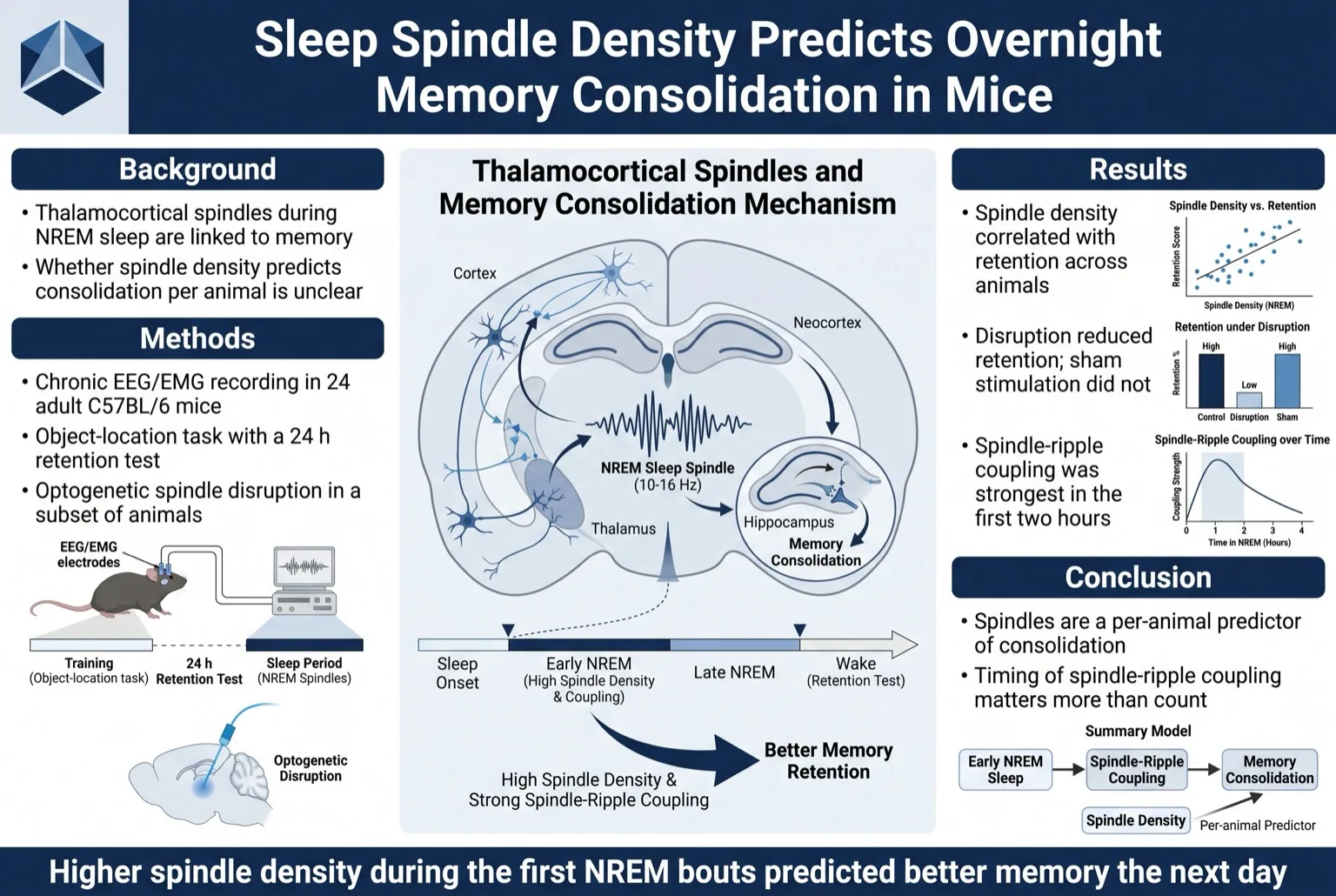
SfN names no font and no body-text size. The Poster Presentations page sets three lettering rules and leaves the rest to you:
- A title banner across the top with the abstract title, authors, affiliations and presentation number, in lettering at least one inch high.
- Panel letters or numbers for illustration sequences at least one inch high, without the words "Fig." or "Figure", which SfN calls unnecessary.
- A heading of one or two lines in very large type over each figure or table, stating its take-home message, and a legend underneath in 16 point or larger type.
The 16 pt legend is the number to plan around. SfN wants results and discussion written into the legends rather than into separate text blocks, with brief methods at the end of each one, so the legend carries more of your poster than it does in a paper. Our guide to writing a figure legend covers what a legend has to define; the difference here is that it has to stay readable on a board. SfN also asks for short paragraphs with ragged-right margins and no paragraphs set entirely in capitals or bold.
For everything SfN leaves open, such as body text, section headings and reference size, the type-size ranges in our guide on how to make a research poster are a sensible starting point. Those come from university poster guides, not from SfN.
How an SfN poster session runs
Each poster presenter is assigned a board and a four-hour session. The poster stays on display for all four hours. Inside that block you get one assigned presentation hour, and you are required to be at the board for it. You may stay longer, and SfN asks you to leave a note on the board if you have to step away for an extended time during your hour.
The logistics on the Poster Presentations page are specific:
- Put your poster up 15 minutes before the session starts and leave it for the whole session.
- Pushpins and presenter buttons are handed out at the Abstract Locator Stations in the poster area. Do not write or paint on the board.
- There is no projection equipment in the poster area. Tablets are allowed at the board for videos and other extras, but SfN provides no power, so charge the device beforehand. Material stored on the device displays more reliably than anything streamed.
- Morning posters come down by noon, so the afternoon authors can set up. Afternoon posters come down by 5 p.m., when the hall closes. Anything left after those times is thrown away.
Theme K (History, Education, and Society) runs on a different clock. Its posters go up at 1 p.m. on Saturday and stay until 5 p.m. on Sunday, with one-hour presentations on Saturday afternoon or Sunday morning. Theme K posters still on the board after 5 p.m. Sunday are discarded.
SfN will also give presenters a set of icons, as a digital graphic, to show whether photographing or recording the poster, and sharing or remixing it, is allowed. Under its photography and recording policy you can print them onto the poster or display them beside it.
SfN ran a "How to Make and Present a Poster for Neuroscience 2026" webinar on October 7, and the recording from the 2025 edition is on demand from the poster pages, along with example posters in PDF.
Virtual poster upload
Every Neuroscience 2026 poster presenter can upload a virtual poster, whether or not they also present in person. The Poster Sessions page sets out what that upload contains:
- Poster PDF (required). Single or multi-page. It must include the introduction, experimental design, analytical methods, conclusions and acknowledgement of funding sources, and the file must be under 2 GB. This is the main image a viewer sees on opening your poster.
- MP4 video (optional). Five minutes or less on the poster’s key points, under 2 GB. The platform transcribes it automatically and the captions cannot be edited, so if you want to control the captions, burn them into the video before you upload it. To replace a video, delete the current upload first.
Virtual posters open to attendees one week before the meeting. There is no scheduled live component: each poster gets an asynchronous chat window, SfN warns you to expect little or no feedback through it, and you will not see how many people viewed your poster. The platform has no download button, but SfN is candid that it cannot stop screenshots. Red and green camera icons let you say whether you consent to the poster being shared outside the platform.
Uploads go through SfN’s OASIS presentation site, and the step-by-step instructions are a PDF linked from the Poster Sessions page. That PDF adds one date: all registrants receive an email with access to the virtual component on November 5, 2026, after which you can search for your own abstract and check how the poster and video display.
Neither the Poster Sessions page nor the upload instructions set page dimensions, a resolution or an orientation for the virtual PDF. Exporting it from the same file you print, at the same 3:2 page, keeps the two versions identical.
SfN 2026 abstract deadlines, fees and limits
Submission opened on May 27. The extended deadline was Thursday, June 11, at 2 p.m. EDT, and abstracts submitted and finalised by then could be unlocked for edits until Friday, June 12, at 2 p.m. EDT. After that the abstract is locked. The fee was $175 and is nonrefundable, paid by MasterCard, Visa or American Express; SfN accepts no purchase orders.
The limits on the submission form:
- Body: 2,300 characters, counting punctuation but not spaces. Each image you add costs 500 of those characters.
- Title: 1,200 characters including spaces, written in sentence case, and not set in bold or italics.
- Keywords: up to three, from SfN’s list or your own.
- Authors: up to 30, with the senior author or authors listed towards the end of the author block.
- Presentation preference: nanosymposium preferred, poster only, or no preference. SfN does not guarantee a nanosymposium slot.
- Linking groups: up to 14 nanosymposium-preferred or 20 poster-only abstracts, if you want related abstracts placed together.
Who can submit is narrower than people expect. An active, individual SfN member must sign and submit the abstract, and the submitting author has to be one of its authors. Institutional Program and Sustaining Associate members cannot submit, and membership in another neuroscience society does not count. Co-authors do not need to be members, but every co-author needs a free My SfN account. Each member can submit one scientific abstract and one Theme K abstract, and can be presenting author on no more than one of each. A student member may submit a scientific abstract only as its presenting author.
The content rules are short and strictly applied. The abstract must report results you already have; SfN rejects abstracts that say "results will be discussed" and warns that "we will show" reads as future results. It must be in English, use standard abbreviations for units, and summarise rigor (sample sizes, replication, blinding, controls) and relevant biological variables. A manuscript on a preprint server does not count as prior publication.
Acceptance notices went to presenting authors in early August with the session title, date and time. A second email in September repeats the assignment with presentation details. Only the presenting author receives these, so forwarding them to co-authors is that person’s job.
Late-breaking abstracts
The late-breaking window opened on September 8 and closed on Tuesday, September 15, at 5 p.m. EDT. It would have closed earlier if the 2,500th submission had arrived first. The fee was $260, nonrefundable, and as with regular abstracts it does not include registration.
Late-breaking abstracts are posters only, in person, virtual-only or both, and the call allows one abstract: either a scientific one (Themes A–J) or a Theme K one. SfN states that late-breaking submissions are held to a higher standard of review than regular abstracts, that there is no deadline extension, and that there is no editing period: the abstract, author block included, had to be final when it was submitted. The length limits match the regular call: 2,300 characters for the body and 1,200 for the title.
Acceptance emails went out in late September, with presentation times following in mid-October. Late-breaking posters hang in their own section next to the main poster floor, grouped by theme, and SfN says they follow the same guidelines as regular poster sessions.
Switching between in-person and virtual presentation
By submitting an abstract you agree that SfN may assign it to in-person, virtual or both venues. Two dates on the Dates and Deadlines page control a change of plan:
- September 10: last day to switch from virtual-only to an in-person presentation.
- November 5: last day to switch from in person to virtual-only.
The second date is the one that matters in autumn. If a visa, a grant or a travel ban stops you reaching Washington, November 5 is the cut-off for converting to virtual-only. A virtual-only presenter still has to buy the virtual-only registration.
Printing a poster for a 6 × 4 ft board
SfN describes two ways to build the poster and leaves the choice to you.
A multi-panel poster. Five columns built from sheets printed on 11-inch-wide paper, or 29 to 30 cm wide A4 or B5, mounted on coloured poster board with borders or spacing between them. SfN suggests grouping related sections on the same background colour.
A single sheet. Printed on a 36-inch or 54-inch-wide inkjet printer, which SfN notes has made this route economical. Carry it in a poster tube, or fold it accordion-style along the long dimension and then once along the short one so it fits a carry-on bag. Use line borders to separate areas, and avoid reflective, plastic-coated paper.
A few numbers follow from the board, and are worth working out before you open the layout file:
- Page size. For a full-board print, set the page to 72 × 48 in. A smaller print at the same 3:2 ratio, such as 54 × 36 in, scales evenly. A 4:3 file such as 48 × 36 in also fits, with bare board around it. Some layout software caps the page size, so check yours before setting 72 in; our scientific poster templates page compares board sizes across meetings and the page limits of common layout tools.
- Roll width. A full-board print is 48 in on its short side, which fits across the 54-inch roll SfN mentions and runs 72 in along it. A 36-inch roll caps the short side at 36 in.
- Resolution. SfN states no dpi or ppi for printed posters. For scale, a 72 × 48 in sheet is 10,800 × 7,200 px at 150 ppi and 21,600 × 14,400 px at 300 ppi. Raster images that size are unwieldy, which is the practical reason to keep text, charts and line art as vector objects and export the final file as PDF; only micrographs and photographs need to be rasters.
- Type. One inch is 72 pt, so the one-inch title lettering SfN asks for means a font size well above 72 pt, because a font’s point size measures more than the height of its capital letters. Print one legend at 100% on office paper and read it from a step back before you send the full sheet.
Your print shop will have its own file requirements, so ask for them before you export rather than after.
Frequently asked questions
What size is an SfN poster?
The board is 6 feet wide by 4 feet high (1.8 m × 1.2 m), so the poster is landscape. SfN states the board, not a print size, and its Poster Presentations page describes both a single printed sheet and a multi-panel poster built from 11-inch-wide sheets.
What font size does SfN require on a poster?
SfN names no font and no body-text size. Its Poster Presentations page asks for title lettering at least one inch high, panel letters or numbers at least one inch high, and figure legends in 16 point or larger type. Everything else is left to the presenter.
When and where is SfN 2027?
Neuroscience 2027 is in Chicago, October 23–27, 2027, according to the Past and Future SfN Meetings page. That page lists the city and dates only; the 2027 abstract dates are not on it.
Can a non-member submit an abstract to SfN?
Not as the submitting author. An active, individual SfN member must sign and submit the abstract, and membership in another neuroscience society does not count. Co-authors do not need to be members, but each needs a free My SfN account.
Is it too late to submit an abstract for SfN 2026?
Yes. The extended regular deadline was Thursday, June 11, 2 p.m. EDT, and late-breaking submission closed on Tuesday, September 15, 5 p.m. EDT. SfN allows no extension and no editing period for late-breaking abstracts.
How long do I have to stand at my SfN poster?
One hour. Posters stay up for the whole four-hour session, and each presenter is assigned a one-hour presentation time inside it when they must be at the board. Post your materials 15 minutes before the session; morning posters come down by noon and afternoon posters by 5 p.m.
Does the SfN abstract fee include meeting registration?
No. The $175 regular fee and the $260 late-breaking fee cover submission only, and both are nonrefundable. Every presenter must register for the meeting, and virtual-only presenters must buy a virtual-only registration.
Источники
- Neuroscience 2026: Dates and Deadlines — Society for Neurosciencehttps://www.sfn.org/meetings/neuroscience-2026/general-information/dates-and-deadlinesДата обращения: 10 окт. 2026 г.
- Neuroscience 2026 (meeting home page) — Society for Neurosciencehttps://www.sfn.org/meetings/neuroscience-2026Дата обращения: 10 окт. 2026 г.
- Neuroscience 2026: Poster Sessions — Society for Neurosciencehttps://www.sfn.org/meetings/neuroscience-2026/call-for-abstracts/presentation-formats/poster-sessionsДата обращения: 10 окт. 2026 г.
- Neuroscience 2026: Poster Presentations (presenter resources) — Society for Neurosciencehttps://www.sfn.org/meetings/neuroscience-2026/call-for-abstracts/presenter-resources/poster-presentationsДата обращения: 10 окт. 2026 г.
- Neuroscience 2026: Presentation Formats — Society for Neurosciencehttps://www.sfn.org/meetings/neuroscience-2026/call-for-abstracts/presentation-formatsДата обращения: 10 окт. 2026 г.
- Neuroscience 2026: How to Submit (call for abstracts) — Society for Neurosciencehttps://www.sfn.org/meetings/neuroscience-2026/call-for-abstracts/how-to-submitДата обращения: 10 окт. 2026 г.
- Neuroscience 2026: Rules for Abstract Submissions — Society for Neurosciencehttps://www.sfn.org/meetings/neuroscience-2026/call-for-abstracts/rules-for-abstract-submissionsДата обращения: 10 окт. 2026 г.
- Neuroscience 2026: Late-Breaking Abstracts — Society for Neurosciencehttps://www.sfn.org/meetings/neuroscience-2026/late-breaking-abstractsДата обращения: 10 окт. 2026 г.
- Neuroscience 2026: Late-Breaking Abstracts, How to Submit — Society for Neurosciencehttps://www.sfn.org/meetings/neuroscience-2026/late-breaking-abstracts/how-to-submitДата обращения: 10 окт. 2026 г.
- Neuroscience 2026: Virtual Poster Upload Using OASIS (PDF) — Society for Neurosciencehttps://www.sfn.org/-/media/SfN/Documents/NEW-SfN/Meetings/Neuroscience-2026/Abstracts-and-Sessions/Instructions_Virtual-Poster-26.pdfДата обращения: 10 окт. 2026 г.
- Past and Future SfN Meetings — Society for Neurosciencehttps://www.sfn.org/meetings/past-and-future-sfn-meetingsДата обращения: 10 окт. 2026 г.
Названия журналов, конференций и продуктов являются товарными знаками их правообладателей. Эта страница — независимый редакционный материал, не аффилированный с ними и не одобренный ими. Требования меняются: сверьте каждый пункт с официальными источниками по ссылкам выше перед подачей или печатью.