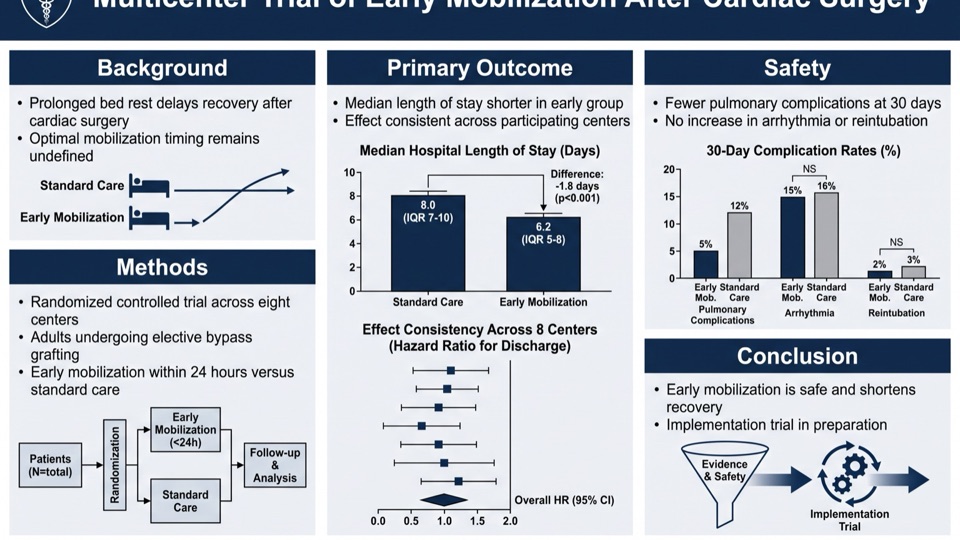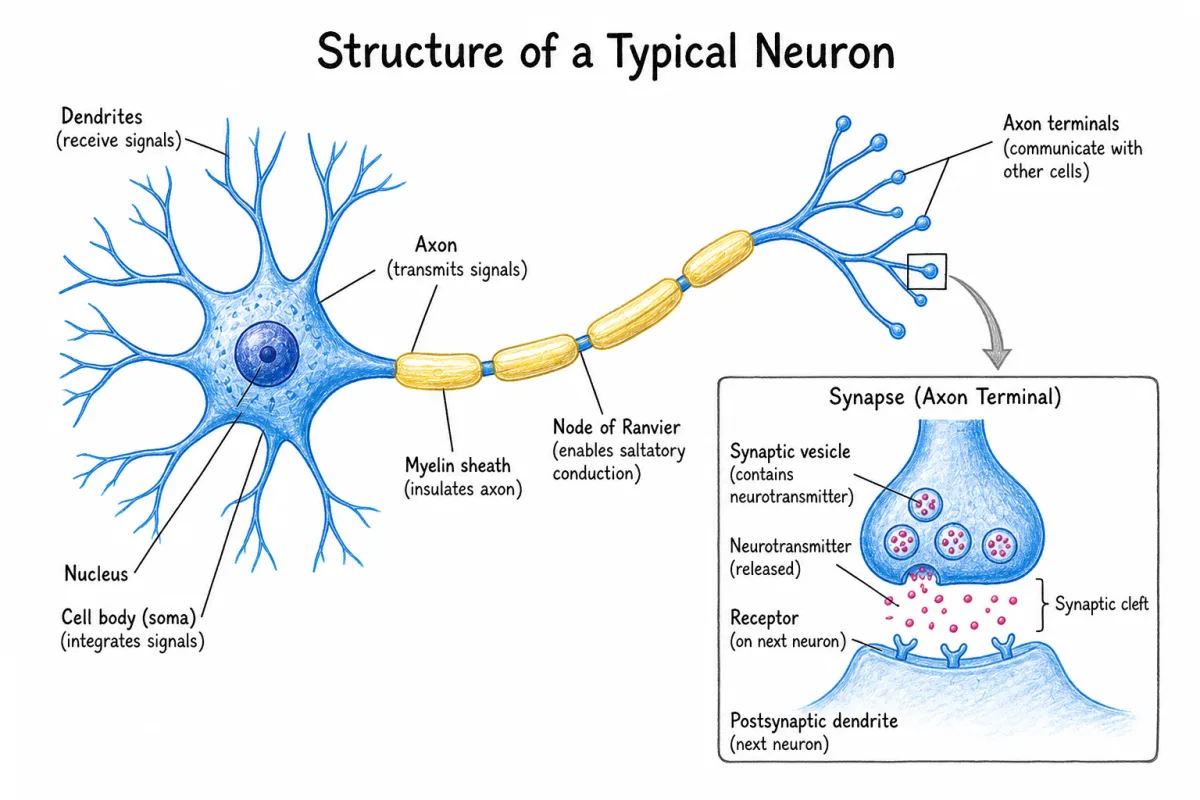
Nature publishes its citation metrics, its median decision times and its acceptance rate, so none of those numbers need guessing. It also publishes two different figure widths on two different pages, which does need explaining. Written for authors deciding whether to submit, and for the ones already asked for production artwork.
Nature impact factor and journal metrics at a glance
Every number below is from Nature’s own Journal Metrics page, which carries the full Clarivate set rather than the single figure most sites quote.
| Metric | Value | JCR year |
|---|---|---|
| Journal Impact Factor | 56.1 | 2025 |
| 5-year Journal Impact Factor | 56.7 | 2025 |
| Immediacy Index | 13.1 | 2025 |
| Eigenfactor Score | 0.97835 | 2025 |
| Article Influence Score | 22.642 | 2025 |
| Source Normalized Impact per Paper (SNIP) | 10.607 | 2025 |
| SCImago Journal Rank (SJR) | 19.713 | 2025 |
| Submission to first editorial decision | 8 days (median) | 2025 |
| Submission to acceptance | 321 days (median) | 2025 |
| Acceptance rate | about 8% of submitted manuscripts | not dated |
| Downloads | 205,603,435 | 2025 |
| Altmetric mentions | 956,164 | 2025 |
The acceptance rate is the one row with no year against it. It appears in Nature’s editorial criteria page as a standing statement rather than an annual statistic, so treat it as an order of magnitude, not a 2025 measurement.
What is the impact factor of Nature?
56.1, for the 2025 JCR year.
That is the two-year Journal Impact Factor: citations recorded in 2025 to items Nature published in 2023 and 2024, divided by the number of citable items published in those two years. The 5-year JIF, which widens the window to 2020–2024, is 56.7 — close enough to the two-year figure that Nature’s citation performance is not being carried by a single recent blockbuster, which is not true of every journal at this level.
Two adjacent numbers are worth more than the JIF for most decisions. The Immediacy Index of 13.1 says the average Nature paper is cited more than thirteen times in its own year of publication, which is a measure of how fast the field reacts rather than how much it eventually accumulates. The SNIP of 10.607 normalises for citation behaviour across fields, so it is the number to reach for when comparing Nature against a journal in a discipline that cites at a different rate.
How Nature compares across the Nature Portfolio
Authors rarely choose between Nature and an unrelated journal. They choose between Nature and the portfolio title next to it, usually after a rejection. Each figure below comes from that journal’s own Journal Metrics page.
| Journal | JIF (2025) | 5-year JIF | Median days to first decision | Median days to acceptance |
|---|---|---|---|---|
| Nature | 56.1 | 56.7 | 8 | 321 |
| Nature Medicine | 52.5 | 52.5 | 4 | 117 |
| Nature Biotechnology | 44.5 | 50.9 | 4 | 185 |
| Nature Methods | 28.3 | 52.5 | 10 | 276 |
| Nature Genetics | 25.5 | 35.3 | 11 | 322 |
| Nature Neuroscience | 20.3 | 24.9 | 9 | 399 |
| Nature Communications | 18.1 | 18.9 | 9 | 242 |
| Scientific Reports | 4.9 | 4.8 | not published | not published |
Two things in that table are worth pausing on.
Nature Methods reports a two-year JIF of 28.3 against a 5-year JIF of 52.5. A methods journal accrues citations over a long tail, because a protocol keeps being cited for as long as people run it. Judging it on the two-year window understates it by roughly half, and that gap is the clearest illustration in the portfolio of why the JIF is a window, not a quality score.
Nature Neuroscience takes a median of 399 days from submission to acceptance, the longest in this set and 78 days longer than Nature itself. If your funding timeline has a hard edge, the acceptance-time column is a more consequential number than the JIF column.
Nature Communications is the row most authors end up on, because it is where a Nature rejection is most often transferred. Our Nature Communications impact factor and figure guide covers its metrics, its $7,350 APC and the figure specifications it publishes under its own name instead of inheriting.
Scientific Reports publishes citation metrics but no speed metrics on its About page. We cover its figure rules in detail in our Scientific Reports figure requirements guide.
What the impact factor does not tell you about publishing in Nature
Springer Nature is a signatory of DORA, the San Francisco Declaration on Research Assessment, and says so directly on the same page that publishes the 56.1. Its stated position is that because a small number of highly cited articles can have outsized influence on the two-year JIF, these citation measures are not necessarily measures of journal quality.
The publisher is telling you not to use its headline number the way most people use it. Three numbers on the same pages carry more decision value:
About 8% of submitted manuscripts are accepted, and most submissions are declined without being sent out for peer review at all. Nature’s editorial criteria page states both.
8 days to first editorial decision, median. That is a fast answer, and it is fast mostly because of the previous sentence. A desk decision arrives in about a week.
321 days from submission to acceptance, median. Just under eleven months for papers that make it, which is the number to plan a postdoc contract or a grant report around.
How wide should a Nature figure be?
Nature publishes two different answers, on two different pages, and neither page acknowledges the other.
| Dimension | Formatting guide | Final submission |
|---|---|---|
| Single column | 90 mm | 89 mm |
| Double column | 180 mm | 183 mm |
| Column-and-a-half | not stated | 120–136 mm |
| Full page depth | 170 mm | 247 mm |
The width discrepancy is 1 mm and 3 mm, which changes nothing you would do at the drawing board. The depth discrepancy is 77 mm, which changes a great deal if you are designing a full-page figure.
The reading that fits both pages: the formatting guide describes what you should be doing while the paper is under review, and the final submission page governs production-quality artwork, which is the stage at which the art department actually places your file. Where they disagree, the final submission numbers are the ones your artwork is judged against, because it is the page you are pointed at when an editor asks for production files.
Practically:
- Design to 180 mm maximum width. It is inside both specifications.
- Confirm every label is legible at 89 mm, the narrower of the two single-column figures.
- For a full-page figure, work to 247 mm of depth from the final submission page, and expect Nature to reduce it. The journal states it will often reduce figures to the smallest size possible for reasons of space, and reserves the final decision on size.
Nature asks authors to indicate the smallest size they think a figure can survive. That request is worth taking seriously, because if you do not answer it the art department will decide for you.
What resolution does Nature require?
For anything that is genuinely a bitmap, the requirement is explicit: all photographic images must be supplied at a minimum of 300 dpi at the maximum size they can be used. The preferred range for PSD, TIFF and JPEG files is 300–600 dpi.
Nature adds the sentence that most resolution advice omits: artificially increasing an image’s resolution in an artwork program will not improve its quality. Upsampling a 150 dpi micrograph to 300 dpi produces a file that passes a numeric check and fails a visual one.
For everything that is not a bitmap, resolution is the wrong question. Nature’s instruction is to supply editable, unflattened vector artwork wherever possible, and not to rasterize line art or text. A vector plot has no dpi; it renders at whatever size the typesetter places it.
Extended Data figures run under a different rule. They are online only, and Nature caps them at 300 p.p.i. and 10 MB, on the grounds that larger files time readers out before they can download them.
What is the minimum font size in a Nature figure?
| Element | Specification |
|---|---|
| Minimum text size | 5 pt |
| Maximum text size | 7 pt |
| Panel labels | 8 pt bold, upright (not italic), lower-case a, b, c |
| Typeface | Sans-serif, preferably Helvetica or Arial |
| Consistency | The same font throughout every figure in the paper |
| Amino-acid sequences | One-letter code in Courier |
| Line weights and strokes | 0.25–1 pt at final size |
The line weight range is the specification authors miss most often, and Nature explains the failure mode: lines thinner than 0.25 pt may vanish in print. A 0.1 pt hairline looks correct on screen at 400% zoom and disappears from the printed page.
Two habits Nature asks you to break. Do not rasterize text or convert it to outlines, which means the fashionable export-everything-flat workflow produces a file the art department cannot correct. And avoid placing lettering directly over images or shaded areas, with reversed type — white lettering on a coloured background — called out specifically in the formatting guide.
The formatting guide adds house style that is invisible until a subeditor catches it: lettering in lower-case with only the first letter capitalized and no full stop, a single space between number and unit, thousands separated with commas, and scale bars rather than magnification factors. Where possible, keys to symbols belong in the legend rather than on the figure.
Which file formats does Nature accept?
| Category | Formats |
|---|---|
| Preferred, photographic | Layered Photoshop (PSD) or TIFF at 300–600 dpi. Keep Photoshop layers intact so labels and arrows stay editable |
| Preferred, line art | Adobe Illustrator (AI), Postscript, vector EPS or PDF — including figures that combine line art with photographs |
| Accepted if unavoidable | JPEG at 300–600 dpi, CorelDraw up to version 8, Microsoft Word, Excel, PowerPoint |
| Not accepted | Canvas, DeltaGraph, Tex, ChemDraw, SigmaPlot — convert to Postscript, EPS or PDF first |
| Extended Data only | JPEG (preferred), TIFF or EPS. No other format is acceptable for Extended Data |
| Chemical structures | .cdx files, submitted at 100% |
On colour: Nature accepts RGB or CMYK, and recommends RGB. The reasoning is worth understanding rather than memorising. RGB has the wider gamut, so it reproduces fluorescent colours more faithfully online, and Nature keeps the RGB space for the web PDF and online images. For print it converts to CMYK automatically, which mutes bright colours and flattens contrast between adjacent coloured areas.
That leaves a real choice. Supply RGB and the online version looks right while the printed version is out of your hands. Convert to CMYK yourself before submitting and you see exactly what print will do, with the chance to fix anything important that the conversion destroys. For a figure where colour carries data — a heatmap, a merged fluorescence panel — doing the conversion yourself and checking it is the safer path.
Nature Portfolio charges a fee towards four-colour printing. The journal states that inability to pay will not prevent publication of colour figures the editors judge essential, but that this must be agreed with the editor before acceptance.
How many figures can a Nature paper have?
Nature does not set a hard cap. It sets a page budget, and display items spend from the same budget as words.
| Format | Text | Display items |
|---|---|---|
| Typical 6-page Article | about 2,500 words | 4 modest display items |
| Typical 8-page Article | about 4,300 words | 5–6 modest display items |
| Extended Data | online only | up to 10 items typically permitted |
The exchange rate is stated explicitly. A modest display item is one that, with its legend, occupies about a quarter of a page, equivalent to about 270 words. A composite figure with several panels usually needs half a page for all its elements to be visible, equivalent to about 600 words. An uninterrupted page of Nature text is about 1,250 words.
So a paper with three composite multi-panel figures has already spent about 1,800 words of a 2,500-word budget on artwork. Nature’s own advice is that when composite figures need the space, the text length has to come down to accommodate them, and that technical detail can move to Methods or Supplementary Information. Methods does not typically exceed 3,000 words and does not count against the main budget, but it cannot contain figures or tables at all.
Other limits worth having in front of you: figure legends fewer than 300 words each, titles no more than 75 characters, subheadings up to 40 characters, and about 50 references in the main text as a guideline.
The gel and blot rules that stop papers
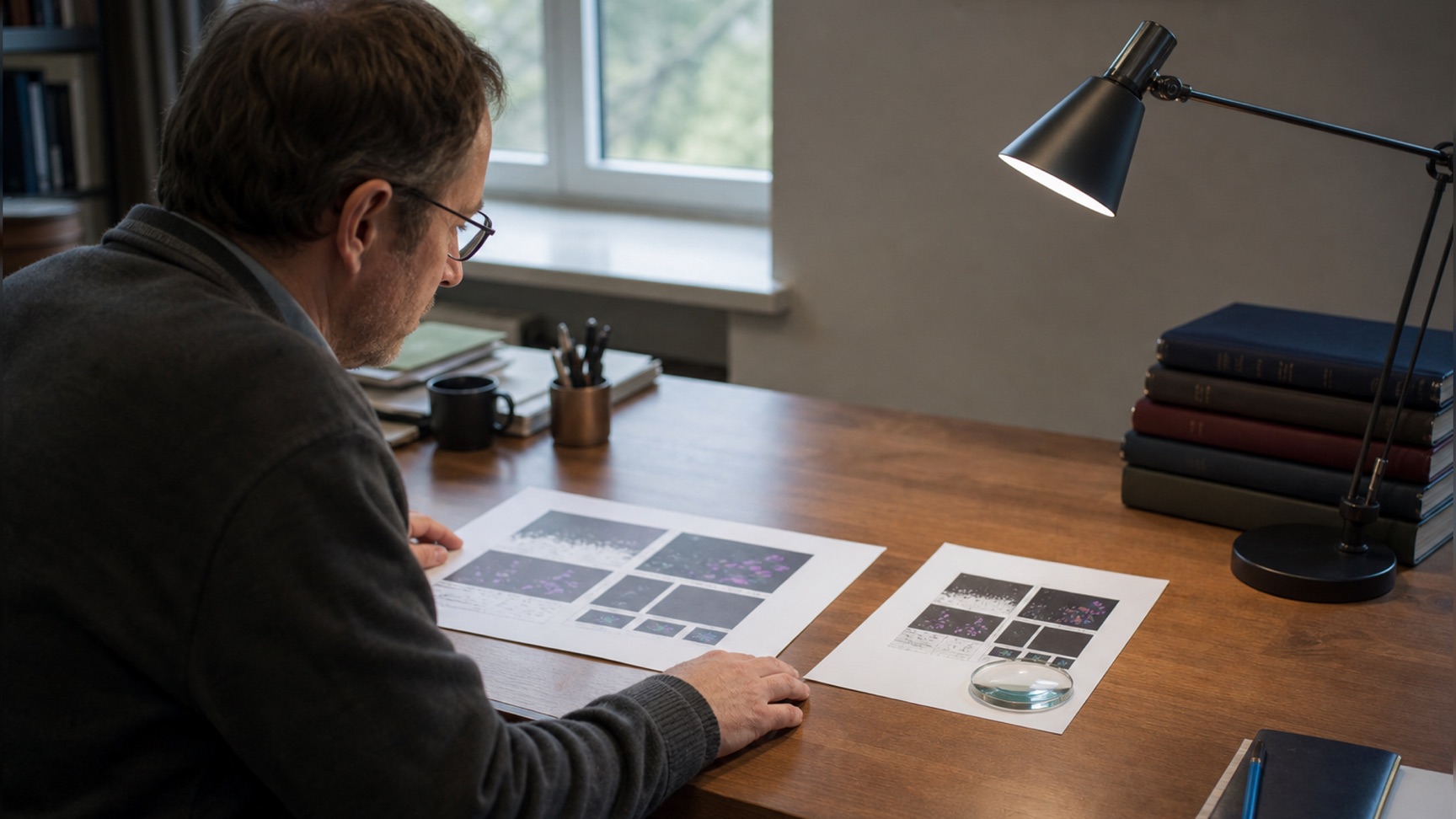
This is the section with the highest cost of getting it wrong, and it is policy rather than formatting. Nature Portfolio states that editors may use software to screen images for manipulation, and that all life science papers require unprocessed original images of gels and western blots to be submitted with the final accepted version, published in the Supplementary Information.
The rules that follow from that:
- Non-adjacent lanes that have been rearranged must be clearly demarcated, with the boundary visible in the figure and the rearrangement stated in the legend.
- Loading controls such as GAPDH or actin must be run on the same blot. If a sample processing control was run on a different gel, the legend has to say so.
- Cropped gels must retain all important bands. Cropping to the band you are arguing about is the version of this that gets caught.
- Quantitative comparisons across different gels or blots are strongly discouraged. Where unavoidable, the legend must state that the samples derive from the same or parallel experiments and that the gels were processed in parallel.
- High-contrast gels are discouraged, because overexposure hides bands that should be visible.
- Brightness and contrast adjustments must be applied equally across the whole image and equally to controls. Adjusting until data disappears is not acceptable.
- Clone and healing tools are unacceptable, along with any feature that deliberately obscures a manipulation.
- Pseudo-colouring and gamma changes in microscopy must be disclosed, and adjustments to individual colour channels on merged images must be noted in the legend.
Nature asks authors to run four checks before submitting: look for duplicated figures, look for spliced lanes, state which panels are loading or processing controls, and confirm the unprocessed scans match the figures. Those four checks take an afternoon. A correction notice takes considerably longer.
A pre-submission checklist
At initial submission, Nature wants text and figures in a single Word or PDF file up to 30 MB, with figure legends next to their figures and line numbers in the text. It explicitly asks you not to upload production-quality figures at this stage.
Before that file goes:
- Figures are legible at 89 mm, printed rather than viewed on screen
- Nothing designed wider than 180 mm
- All text between 5 pt and 7 pt, panel labels 8 pt bold lower-case
- One sans-serif typeface across every figure in the paper
- No stroke thinner than 0.25 pt
- Photographic panels at 300 dpi or better at final size, never upsampled
- Line art still vector, text never converted to outlines
- Scale bars present, magnification factors absent
- Error bars and statistics defined in every legend
- Each legend under 300 words
- Display item count matched to the page budget, not to how many panels you have
- Unprocessed gel and blot scans located and matched to their figures
- Title within 75 characters
Frequently asked questions
What is the impact factor of Nature? 56.1 for the 2025 JCR year, with a 5-year Journal Impact Factor of 56.7. Both come from Nature’s own Journal Metrics page, which also publishes an Immediacy Index of 13.1, an SJR of 19.713 and a SNIP of 10.607.
What is the acceptance rate of Nature? About 8% of submitted manuscripts, with most declined without being sent out for peer review. Median time to first editorial decision is 8 days; median time to acceptance is 321 days.
What figure width does Nature use? Two published answers. The formatting guide says 90 mm single column and 180 mm double column; the final submission page says 89 mm and 183 mm, plus a column-and-a-half of 120–136 mm. Design to 180 mm and check legibility at 89 mm.
What resolution does Nature require? 300 dpi minimum for photographic images at the largest size used, 300–600 dpi preferred. Line art should be vector instead. Extended Data figures are capped at 300 p.p.i. and 10 MB.
What is the minimum font size in a Nature figure? 5 pt minimum, 7 pt maximum, sans-serif and preferably Helvetica or Arial. Panel labels are 8 pt bold.
Can I submit figures inside my Word document? At initial submission, yes — Nature encourages a single Word or PDF file up to 30 MB with figures placed in the text. Production-quality figures should not be uploaded until an editor asks for them.
Does Nature charge for colour figures? Yes, a fee towards four-colour printing. Colour figures the editors judge essential will still be published if you cannot pay, but this has to be agreed with the editor before acceptance.
Does Nature accept graphical abstracts? The formatting guide does not list a graphical abstract among the elements of a Nature Article. What it does encourage, where space allows, is a simple schematic panel inside an Extended Data figure summarising the paper’s main finding.
Where to go next
The metrics on this page take a minute to read and settle a decision you had probably already made. The specifications take an afternoon and decide whether that decision costs you a production round.
The pattern behind most of the figure rules above is one requirement wearing different clothes: Nature wants artwork that is still editable when it reaches the art department. Live vector paths, live text, layers intact, strokes at real weights. Every rule about rasterizing, outlining and flattening is that requirement restated.
If you are rebuilding rather than patching, our Scientific Reports figure requirements guide covers the same Nature Portfolio artwork rules for a journal that publishes far fewer of its own specifications, and our comparison of figure tools is honest about which ones actually produce the unflattened vector output this all depends on.
For the other end of the citation-shape spectrum, our PNAS impact factor and figure guide covers a journal whose cited half-life is 11.5 years, where the two-year window Nature suits so well works against it.
References
- Nature — Journal Metrics — Springer Naturehttps://www.nature.com/nature/journal-impactAccessed Aug 12, 2026
- Nature — Editorial criteria and processes — Springer Naturehttps://www.nature.com/nature/for-authors/editorial-criteria-and-processesAccessed Aug 12, 2026
- Nature — Formatting guide — Springer Naturehttps://www.nature.com/nature/for-authors/formatting-guideAccessed Aug 12, 2026
- Nature — Final submission — Springer Naturehttps://www.nature.com/nature/for-authors/final-submissionAccessed Aug 12, 2026
- Nature Portfolio — Image integrity and standards — Springer Naturehttps://www.nature.com/nature-portfolio/editorial-policies/image-integrityAccessed Aug 12, 2026
- Nature Medicine — Journal Metrics — Springer Naturehttps://www.nature.com/nm/journal-impactAccessed Aug 12, 2026
- Nature Biotechnology — Journal Metrics — Springer Naturehttps://www.nature.com/nbt/journal-impactAccessed Aug 12, 2026
- Nature Methods — Journal Metrics — Springer Naturehttps://www.nature.com/nmeth/journal-impactAccessed Aug 12, 2026
- Nature Genetics — Journal Metrics — Springer Naturehttps://www.nature.com/ng/journal-impactAccessed Aug 12, 2026
- Nature Neuroscience — Journal Metrics — Springer Naturehttps://www.nature.com/neuro/journal-impactAccessed Aug 12, 2026
- Nature Communications — Journal Metrics — Springer Naturehttps://www.nature.com/ncomms/journal-impactAccessed Aug 12, 2026
- Scientific Reports — About the journal — Springer Naturehttps://www.nature.com/srep/aboutAccessed Aug 12, 2026
Journal, conference and product names are the trademarks of their respective owners. This page is independent editorial content and is not affiliated with, authorised by, or endorsed by them. Specifications change — confirm every requirement against the official sources linked above before you submit or print.